


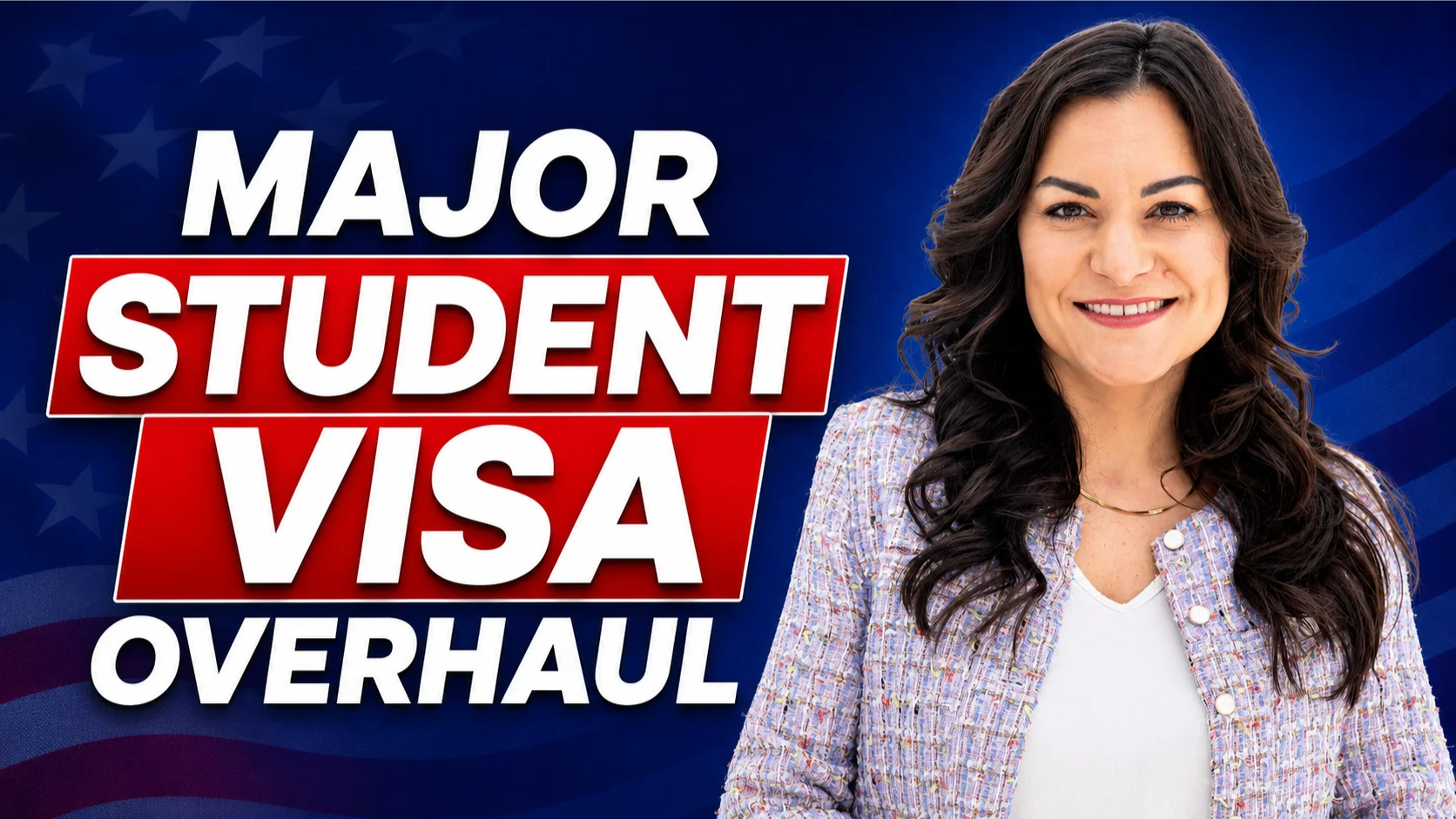
US Student Visa Update September 15, 2026 | New Fixed Admission Periods, Extension Rules and What International Students Need to Know
The United States is introducing a major immigration rule change that will affect many international students, exchange visitors, and foreign media representatives. Beginning September 15, 2026, the traditional Duration of Status (D/S) admission framework will be replaced with fixed admission periods for F, J, and I nonimmigrants.
This change means that many students who previously remained in the United States for the duration of their academic programme, while maintaining their immigration status, will now need to pay closer attention to a specific admission end date.
The new rule is especially important for international students pursuing Bachelor’s, Master’s, and PhD programmes, as well as exchange visitors whose programmes extend beyond their initial admission period.
In this guide, we explain the new US student visa rules, what is changing on September 15, 2026, how the changes affect current and future students, and what applicants should do to prepare.
US Student Visa Changes 2026: Quick Overview
| Detail | Information |
|---|---|
| Country | United States |
| Effective date | September 15, 2026 |
| Affected categories | F, J and I nonimmigrants |
| Previous system | Duration of Status (D/S) |
| New system | Fixed admission period |
| F-1 and J-1 maximum | Generally up to four years, or programme length if shorter |
| Extension | Application through USCIS |
| New departure period | Generally 30 days |
| Current students | Transition provisions apply |
The new policy is based on a final rule published by the Department of Homeland Security (DHS) in the Federal Register on July 17, 2026.
What Is Duration of Status?
Duration of Status, commonly called D/S, allowed eligible F-1 students and J-1 exchange visitors to remain in the United States for the period necessary to complete their authorised programme, provided they maintained their immigration status.
Under the previous system, a student could generally continue studying beyond the original expected programme length if the school properly extended the programme and the student remained in valid status.
The new rule introduces a fixed admission period with a specific end date. Students who need more time must follow the new extension-of-stay procedures.
What Is Changing on September 15, 2026?
1. Fixed four-year admission period
For most new F-1 and J-1 students and exchange visitors, the admission period will be tied to the length of the programme, up to a maximum of four years.
For example, a student admitted for a two-year Master’s programme may receive an admission period based on that programme length. A student enrolled in a longer programme may need an extension if the authorised admission period expires before the programme is completed.
The four-year period is not a guarantee that every student will receive four years. The actual admission end date is determined by the applicable rules and the student’s programme.
2. Extension of stay through USCIS
Students who need to remain in the United States beyond their authorised admission period will generally need to apply for an Extension of Stay (EOS) with the United States Citizenship and Immigration Services (USCIS).
This introduces an additional immigration procedure for students who previously relied on maintaining status and extending their academic programme through their school.
Students should begin reviewing their immigration documents well before the admission end date.
3. New 30-day departure period
The new rule provides a 30-day period for departure after the authorised admission period ends for the relevant F and J categories.
This is different from the previous 60-day departure period generally available to F-1 students after completing their programme or authorised practical training.
The departure period is not permission to continue studying or working indefinitely. Students should follow the applicable rules for their specific category.
4. Stricter programme and school changes
The new rule introduces additional restrictions and procedures for certain changes of programme, educational level, or school.
Students who plan to transfer schools, change their academic programme, or continue to another degree should seek guidance from their designated school official (DSO) or exchange programme sponsor.
A change of school or programme should not be treated as automatically approved under the new system.
Does the New Rule Affect Students Already in the United States?
Yes, but the transition provisions are important.
Students and exchange visitors who are already in the United States in valid F or J status on September 15, 2026, may remain under the transition provisions without immediately filing an extension of stay.
The transition period is tied to the programme end date on the student’s Form I-20 or DS-2019, or the applicable maximum period under the new rule.
This means students who are already in the US should not assume that their stay ends on September 15, 2026. They should review their individual immigration records and consult their school’s international student office.
What International Students Should Do Now
Check your Form I-94
The Form I-94 is the official arrival and departure record for people entering the United States.
Students should review their I-94 record and understand the admission information recorded for their category. Under the new system, eligible new admissions will generally have a specific Admit Until Date.
The visa expiration date in your passport is not the same as your authorised period of stay in the United States.
Review your Form I-20 or DS-2019
F-1 students should review their Form I-20, while J-1 exchange visitors should review their Form DS-2019.
Confirm the programme end date and discuss any expected extension with your DSO or exchange programme sponsor.
Contact your international student office
Students who expect to remain in the United States beyond the authorised admission period should contact their university’s international student office early.
The office can explain the transition provisions, school reporting requirements, and the appropriate process for requesting additional time.
Avoid overstaying
Students should not remain in the United States beyond their authorised admission period without taking the appropriate lawful action.
Failure to maintain immigration status can have serious consequences for future study, employment, and immigration applications.
How the Rule Affects Different Students
Undergraduate students
Students pursuing Bachelor’s degrees should carefully track their admission end date, especially if they expect to change their major, transfer institutions, or continue to graduate school.
A four-year admission period may not cover every academic pathway, so students should understand the requirements for any additional time.
Master’s students
Master’s students may be affected if their programme extends beyond the initial admission period. Students should plan ahead for thesis completion, research, internships, and any further academic study.
PhD students
Doctoral students should pay particular attention to the new rules because research, dissertation writing, and programme completion can take several years.
Students should discuss their expected completion date with their university and review the extension-of-stay requirements well before their admission period expires.
J-1 exchange visitors
J-1 exchange visitors, including students, researchers, and scholars, are also affected by the new fixed admission framework.
The applicable admission period depends on the programme and the relevant J-1 category.
Frequently Asked Questions
Is the US ending student visas?
No. The new rule changes the admission framework for F, J, and I nonimmigrants. It does not eliminate US student visas or prevent international students from applying to study in the United States.
What is the new maximum stay for F-1 students?
The new framework generally provides an admission period of up to four years, or the length of the programme if shorter, subject to the applicable rules.
Do current F-1 students need to leave on September 15, 2026?
No. Current students who are maintaining valid status may benefit from transition provisions. They should review their individual circumstances with their international student office.
Will every student receive four years?
No. The admission period is tied to the authorised programme and the applicable rules. Some students may receive a shorter period.
Can students extend their stay?
Students who need additional time may apply for an Extension of Stay through USCIS, subject to the relevant requirements.
Is the 30-day grace period for every student?
The new 30-day departure period applies to the relevant F and J categories under the new rule. Students should confirm their specific departure rules with their school or exchange programme sponsor.
Does the rule affect international students from Ghana?
Yes. The rule is relevant to eligible F-1 and J-1 students regardless of nationality. Ghanaian students should review the new requirements with their university’s international student office.








Leave a comment