



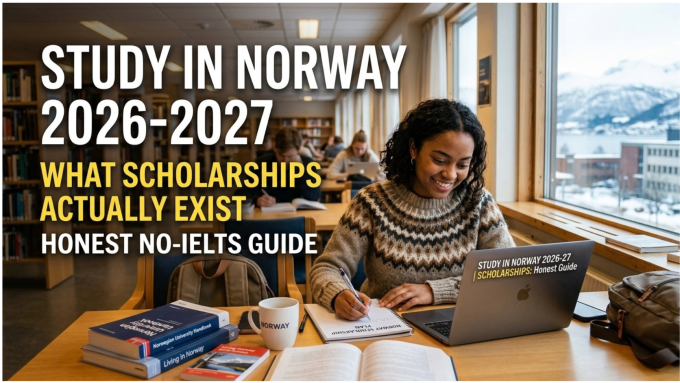
Photo by Amos Getanda on Pexels
Need to Know
- Start applying 12 to 18 months before your intended intake.
- Apply to several scholarships in parallel, not just one.
- Never reuse the same personal statement for every application.
Applying for a scholarship to study abroad is a process, not a single form. Most successful applicants spend months preparing documents, researching the right-fit programmes, and tailoring their application to each scholarship’s specific criteria, well before any deadline appears on the calendar. This guide walks through that process step by step, from finding scholarships worth your time to avoiding the mistakes that sink otherwise strong applications.
Step 1: Start Early and Build a Target List
Begin searching at least 12 to 18 months before your intended start date. Fully-funded scholarships like Chevening, DAAD, Commonwealth and Fulbright typically open applications a full year in advance, with hard deadlines that don’t move for late applicants. Build a spreadsheet of scholarships you’re eligible for, including their deadlines, funding type (fully-funded, partial, tuition-only), and specific eligibility requirements, so you’re working from a clear plan rather than discovering deadlines after they’ve passed.
Step 2: Confirm You Actually Meet the Eligibility Criteria
Before investing time in an application, check the fine print: minimum grade or GPA requirements, required English test scores, work experience requirements, age limits, and nationality restrictions. Many scholarships are program- or field-specific. Applying to scholarships you don’t qualify for wastes the limited time you have for the ones you do.
Step 3: Take Your English Proficiency Test Early
If your target scholarship or university requires IELTS, TOEFL, or Duolingo, book your test early – scores can take weeks to arrive, and a low first score often needs a resit. Don’t let this be the document holding up an otherwise complete application.
Step 4: Request Recommendation Letters With Plenty of Notice
Give your referees – lecturers, employers, or supervisors – at least 4 to 6 weeks notice, and provide them with your CV, a summary of the scholarship, and what you’d like them to highlight. A rushed reference is often a generic, weak one, and admissions committees can tell the difference.
Step 5: Write a Personal Statement for Each Scholarship, Not a Template
Reusing the exact same personal statement across every application is the fastest way to get rejected by all of them. Every scholarship asks a slightly different question and values different things – leadership, community impact, academic excellence, financial need. Adapt your draft to answer the actual prompt, and reference the specific programme or country by name so it doesn’t read as a mail-merge.
Step 6: Apply to Several Scholarships in Parallel
Even outstanding candidates are routinely rejected from the most competitive, fully-funded scholarships simply due to volume of applicants. Treat any single scholarship as one shot among several, not your only plan. Mix a few highly competitive fully-funded options with some less well-known or partial-funding scholarships where competition is lower.
Step 7: Submit Before the Deadline, Not On It
Submit at least a few days early. Portals crash, documents fail to upload, and referees sometimes submit their letters late – all of which are far easier to fix with a buffer than in the final hour before a deadline.
Where to Find Legitimate Scholarships
Start with official sources rather than random listicles: the scholarship or government’s own website (Chevening.org, DAAD.de, cscuk.fcdo.gov.uk for Commonwealth, foreign.fulbrightonline.org), your target university’s financial aid or international office page, and Ghana’s own Ministry of Education or GETFund for government-funded options. Scholarship aggregator sites can help with discovery, but always verify final details on the scholarship’s own official page before applying or paying any fee.
A genuine scholarship never asks you to pay to apply or to “release” your winnings. Treat any request for payment as a red flag.
Documents You’ll Need
- Academic transcripts and certificates (often needing certified translation if not in English)
- A CV or resume, tailored to an academic/scholarship format
- A personal statement or motivation letter, written specifically for that scholarship
- Two to three recommendation/reference letters
- English proficiency test results (IELTS, TOEFL, or Duolingo, depending on the requirement)
- A valid passport
- Proof of admission or an offer letter, for scholarships that require you to have one before applying
Common Mistakes to Avoid
- Applying at the last minute, leaving no time to fix errors or missing documents
- Sending a generic personal statement that doesn’t answer the specific prompt
- Ignoring eligibility criteria and applying anyway, hoping for an exception
- Only applying to one scholarship and treating it as a guaranteed outcome
- Skipping the fine print on what the funding actually covers – some “scholarships” only cover tuition, not living costs or flights
Frequently Asked Questions
How early should I start applying for scholarships to study abroad?
Start 12 to 18 months before your intended intake. Many fully-funded scholarships open a year in advance with fixed deadlines, and preparing documents like references and English test scores takes time.
Can I apply for more than one scholarship at a time?
Yes, and you should. Applying to only one scholarship, especially a highly competitive fully-funded one, is a risky strategy even for strong candidates.
What documents do I need for a scholarship application?
Most applications need transcripts, a CV, a personal statement, 2–3 recommendation letters, an English test score, and a valid passport. Some also require an existing university offer letter.
Do I need an agent to apply for scholarships?
No. Every major scholarship programme accepts direct applications from candidates. An agent can offer convenience but isn’t required, and you should never pay someone who guarantees a scholarship outcome.
Related: Browse all Scholarships · Study Abroad Guides









Leave a comment